
phaṭ is pronounced as a single syllable but in Indic scripts must technically be written as two characters (there are two examples of phaṭ as a single character below). In Buddhist Tantra it functions in the same way as a seed-syllable, and is often associated with the mantras of wrathful deities. The word phaṭ means somthing like "crack!" is imported from the Vedic tradition. In the Vajrasattva mantra it is added when the mantra is used to subdue demons.
The ṭ is written with a virama diacritic to indicate that it has no following vowel.
Pronounced /pʰəʈ/ (IPA)
Other bījas: a | āḥ | dhīḥ | hrīḥ | hūṃ | maiṃ | oṃ | tāṃ | traṃ | svāhā |
Examples
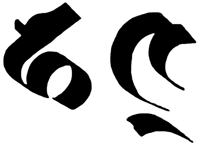 |
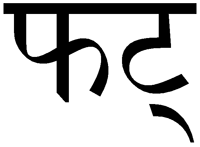 |
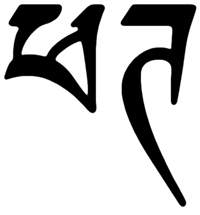 |
| phaṭ Siddham |
phaṭ Devanāgarī |
phaṭ Tibetan - Uchen |
Notes
phaṭ occurs in mantras for Vajrasattva, Vajrayogini, and the Dharma doors mantra which occurs in the Hevajra Tantra and in offering section of tantric rituals for Tārā, and Vajrayogini.
In Tibetan retroflex consonants such as ṭ are written by using the mirror image of the matching dental.
Last updated: 21/09/2015